If you own a tree that borders a public road, you are legally responsible for keeping it safe. Overhanging branches, deadwood, or unstable trees can pose a risk to vehicles, pedestrians, and cyclists. However, there is an important distinction to understand: you cannot simply place cones in the road and begin cutting.
Whenever tree surgery affects the public highway — whether by working from the carriageway, narrowing a pavement, installing temporary traffic lights, or managing pedestrian flow — formal permission and approved traffic management must be in place before work begins.
Here is how the process works in Devon.
Step 1: Confirm the Scope of Work
Before any application is made to the highway authority, the proposed tree work must be clearly defined.
At Devon Tree Services, we begin by:
- Confirming you, as the landowner, authorise the work
- Assessing the tree’s structural condition and risk profile
- Identifying appropriate pruning objectives or removal requirements
- Ensuring works align with BS3998:2010 Tree Work – Recommendations
This ensures the intervention is justified, proportionate, and technically sound.
If the tree is protected by a Tree Preservation Order (TPO) or located within a Conservation Area, consent from the Local Planning Authority may also be required before highway permits are sought.
You remain in control of the decision. Our role is to ensure the plan is compliant, safe, and practical.
Step 2: Gaining Permission to Occupy the Highway
If the tree work impacts any part of the public highway, a formal application must be made to the relevant highway authority. In Devon, this is typically Devon County Council.
This may involve:
- Applying for a permit or licence to occupy the highway
- Submitting detailed work schedules
- Agreeing approved dates and working times
- Providing a compliant traffic management plan
Highway authorities take public safety extremely seriously. Applications must demonstrate that risk to road users and pedestrians has been properly assessed and controlled.
We manage this entire process on your behalf, ensuring that no work commences until formal approval is granted.
Step 3: Designing Traffic Management to Current Standards
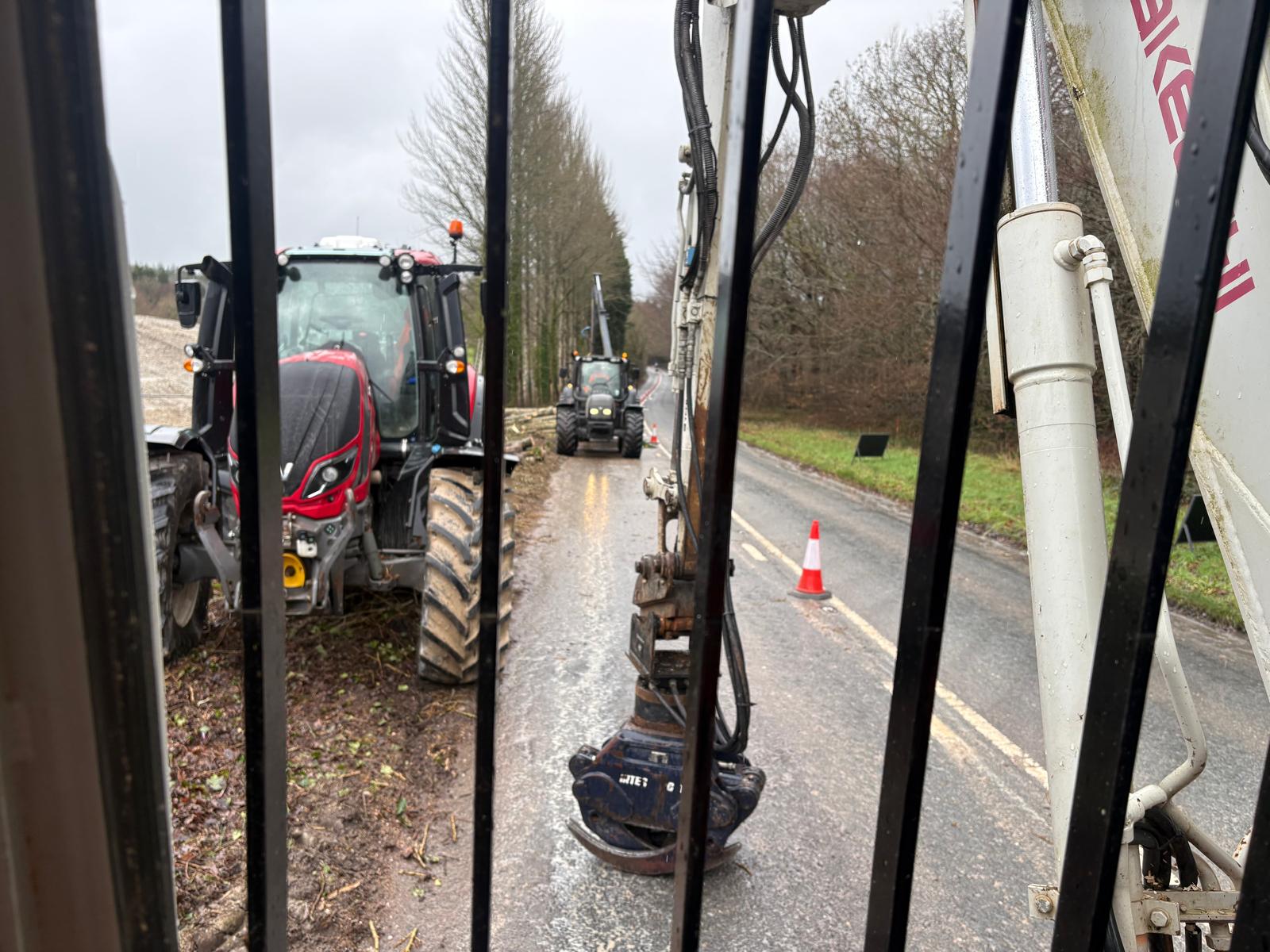
Roadside tree work introduces additional and significant hazards:
- Moving traffic
- Cyclists
- Pedestrians
- Reduced visibility
- Restricted working space
- Elevated operations over live carriageways
Traffic management must comply with current standards and guidance, including the Safety at Street Works and Road Works Code of Practice.
Depending on the site, traffic management may include:
- Advance warning signage
- Cones and barriers
- Pedestrian diversions
- Temporary traffic lights
- Lane closures
- Stop/go systems
Each site requires a bespoke plan based on traffic volume, speed limits, visibility, and working space.
Our teams are trained and qualified to work safely on the public highway. Traffic management is not an afterthought — it is an integral part of the risk assessment and planning process.
Step 4: Safe Installation and Efficient Completion
On the agreed date:
- Approved traffic management measures are installed in accordance with the submitted plan.
- Exclusion zones are established and enforced.
- Aerial or ground-based tree work is carried out in line with BS3998 and safe systems of work.
- All timber, brash, and equipment are cleared promptly.
- Traffic management is dismantled safely once works are complete.
The objective is always the same: minimal disruption and maximum safety.
Professional coordination ensures that roads are reopened as quickly as possible without compromising standards.
Why You Should Not Navigate the Highways Process Alone
Highway permits and traffic management requirements can be complex. Attempting to organise roadside tree work without professional support can lead to:
- Delays due to rejected applications
- Enforcement action for unauthorised occupation of the highway
- Increased liability if an incident occurs
- Invalidated insurance coverage
- Unsafe working conditions
Even seemingly minor works — such as removing overhanging branches — can require formal traffic control measures if operatives or equipment encroach onto the carriageway.
As the tree owner, you remain responsible for your tree’s safety. However, we take responsibility for managing the technical aspects of permissions, compliance, traffic control, and safe working procedures.
Legal Responsibilities for Roadside Trees
Landowners whose trees border public roads have a duty of care to prevent foreseeable harm. This includes managing:
- Deadwood overhanging carriageways
- Obstructions to sightlines or signage
- Clearance for high-sided vehicles
- Structural instability that could lead to failure
If a tree fails and causes injury or damage, liability may fall on the landowner if reasonable steps were not taken to manage known risks.
Professional inspection and documented works provide a defensible position should any dispute arise.
Professional Roadside Tree Work Across Devon
Devon Tree Services regularly undertakes roadside tree work across Devon, combining arboricultural expertise with full highway compliance.
Our services include:
- Tree risk assessments
- BS3998-compliant pruning and removal
- TPO and Conservation Area applications
- Highway permit applications
- Traffic management planning and installation
- Emergency roadside response
If you have a tree bordering a public road and are unsure how to proceed, contact our team. We will guide you through the process, secure the necessary permissions, and carry out the work safely and correctly.
Phone: 01803 814126
Email: info@devontreeservices.co.uk