Arborist vs Arboriculturist – what is the difference, and which one do you actually need? The terms are often used interchangeably, but they can describe different roles within professional tree care. Understanding that distinction can help you find the right expertise, whether you need practical tree surgery, an assessment of a concerning tree, or specialist advice for a development site.
At Devon Tree Services, we bring both sides together. Our trained arborists undertake practical tree work, while our arboricultural professionals provide consultancy, tree risk assessment and management advice. This means the recommendation can start with what the tree and site actually need, rather than simply what work can be carried out.
Arborist vs Arboriculturist: What’s the Difference?
The simplest way to understand Arborist vs Arboriculturist is to think about practical tree work compared with assessment and management.
An arborist is primarily concerned with carrying out work to trees safely and correctly.
An arboriculturist takes a broader view of tree condition, risk, biology, management, planning and the relationship between trees and their surroundings.
There can be significant overlap. Experienced arborists need a good understanding of tree biology, while arboriculturists may also have extensive practical tree-work experience.
The important difference for a client is the type and depth of expertise required for the particular problem.
What Is an Arborist?
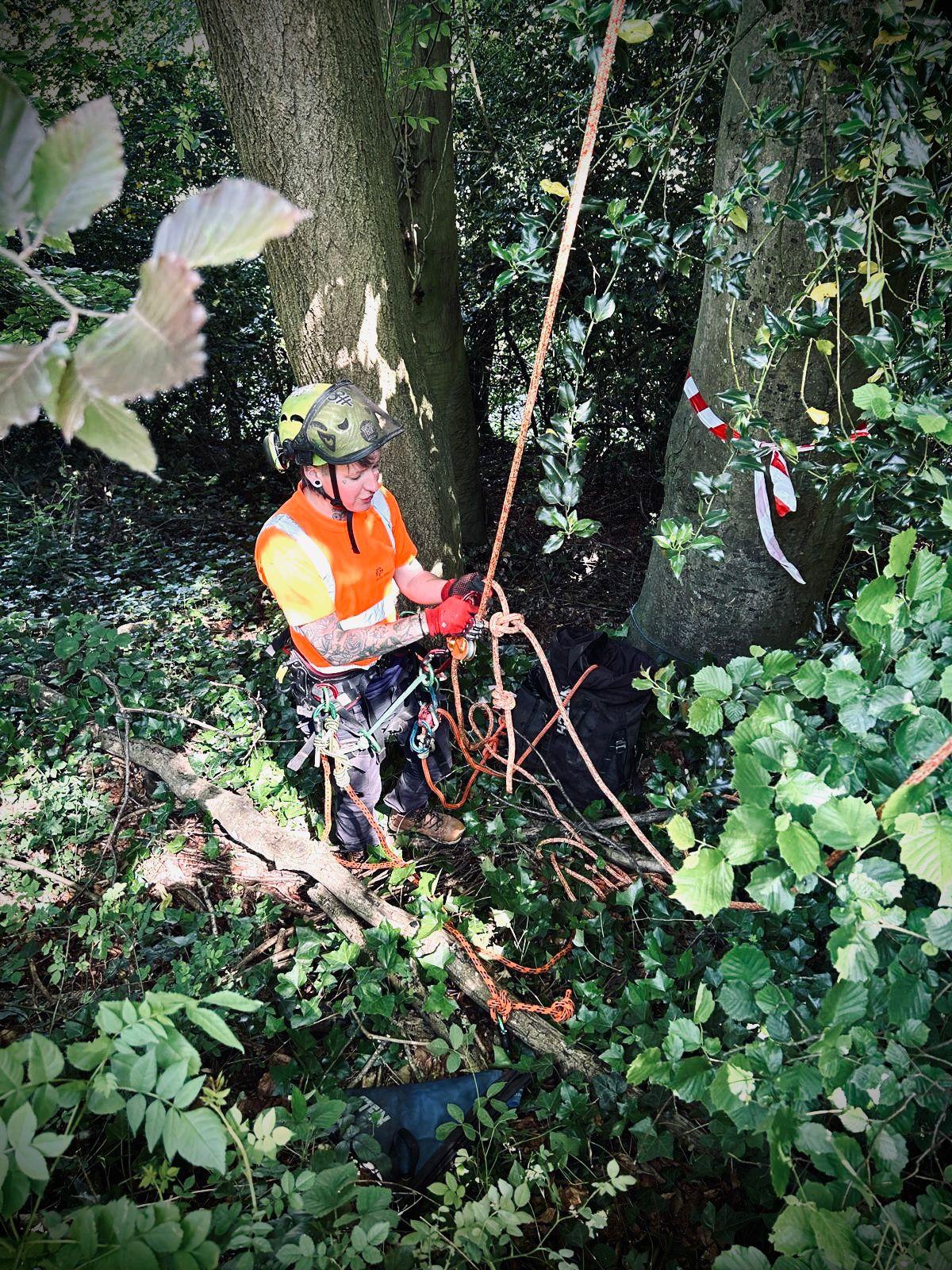
An arborist is a trained tree-care professional who undertakes practical work on trees.
This can involve working at height, using specialist climbing and rigging systems, operating chainsaws and machinery, and managing potentially hazardous sections of timber in difficult environments.
Typical arborist work includes:
- Crown reduction
- Crown lifting
- Crown thinning where appropriate
- Formative pruning
- Deadwood removal
- Sectional dismantling
- Tree felling
- Storm-damaged tree work
- Hedge management
- Stump grinding
In simple terms, an arborist is generally the professional who carries out the work on the tree.
A Professional Arborist Does More Than Cut Trees
Professional arboriculture is very different from simply cutting branches.
A competent arborist needs to understand how trees respond physiologically to pruning and how different species react to particular interventions.
Cuts should be made for a defined arboricultural objective rather than simply removing growth until a tree looks smaller.
Professional pruning should therefore consider factors such as tree species, condition, age, structure and the desired management outcome.
At Devon Tree Services, tree work is undertaken in accordance with relevant professional standards, including BS3998:2010 Tree Work – Recommendations.
You can learn more about our practical Tree Work services.
What Is an Arboriculturist?
An arboriculturist focuses more broadly on the science, assessment and management of trees.
Rather than beginning with the question of how a tree should be cut, their starting point is more likely to be:
Does anything need to be done at all?
An arboriculturist may assess:
- Tree health
- Physiological condition
- Structural condition
- Decay and defects
- Tree-related risk
- Site usage
- Long-term management requirements
- Planning constraints
- Development implications
- Appropriate retention or removal options
Their role is to bring these different factors together and provide proportionate, evidence-based recommendations.
Arboriculturists and Tree Risk
Consider a mature tree close to a house.
The homeowner may be concerned because the tree has a cavity, a significant lean or visible fungal fruiting bodies.
It would be easy to look at those features in isolation and assume that the tree needs to be removed.
An arboriculturist should look at the wider picture.
Questions might include:
- What species is the tree?
- Is the lean longstanding or recent?
- What is the extent and location of any decay?
- Is the defect structurally significant?
- What would be affected if failure occurred?
- How frequently is that area occupied?
- Can risk be managed without removing the tree?
- Would further investigation provide useful information?
The appropriate recommendation could be pruning, further investigation, monitoring, changing how the surrounding area is used or, where justified, removal.
The objective is a proportionate response based on evidence.
Arborist vs Arboriculturist for Tree Risk Assessments
This is one area where understanding Arborist vs Arboriculturist becomes particularly important.
If you are simply looking for somebody to carry out already-specified pruning, an experienced arborist may be exactly what you need.
If you are asking whether a tree represents an unacceptable risk in the first place, you may require a more detailed arboricultural assessment.
Professional tree risk assessments can be particularly valuable for:
- Estates
- Schools
- Commercial premises
- Holiday parks
- Residential developments
- Roadside trees
- Publicly accessible land
- Properties containing significant mature trees
The assessment should consider both the condition of the tree and its surroundings rather than treating individual defects as automatic reasons for removal.
Arboriculturists and Planning Applications
Another area where arboricultural consultancy becomes particularly important is planning and development.
Where construction is proposed close to existing trees, an arboriculturist may be required to prepare information in accordance with BS5837:2012 Trees in Relation to Design, Demolition and Construction – Recommendations.
Depending on the project, this can include:
- Tree surveys
- Tree categorisation
- Root Protection Areas
- Tree Constraints Plans
- Arboricultural Impact Assessments
- Tree Protection Plans
- Arboricultural Method Statements
The objective is to understand how existing trees interact with the proposed development and determine how important trees can be retained and protected where appropriate.
Our Tree Consultancy service provides professional arboricultural support for homeowners, developers, architects and landowners across Devon.
When Do You Need an Arborist?
You are most likely to need an arborist when the required work has already been established and the priority is completing it safely and professionally.
For example:
- A crown reduction has already been specified.
- Deadwood needs removing.
- Lower branches require lifting for clearance.
- A tree has been approved for removal.
- A stump needs grinding.
- A hedge requires professional management.
- Storm damage needs to be dealt with safely.
The key consideration is choosing a suitably trained, experienced and insured contractor.
Tree work, particularly when climbing, rigging or chainsaws are involved, is a specialist and potentially hazardous activity.
When Do You Need an Arboriculturist?
You are more likely to need an arboriculturist when your main question is:
“What should I do about this tree?”
Rather than:
“Who can carry out this work?”
Situations where arboricultural advice may be appropriate include:
- You are concerned about the safety of a tree.
- A tree appears to be declining.
- Fungal fruiting bodies or decay are present.
- You manage a large population of trees.
- You require a formal tree risk assessment.
- Development is proposed near existing trees.
- A planning authority has requested a BS5837 survey.
- You need long-term tree management recommendations.
- You are deciding whether a significant tree should be retained or removed.
In these situations, professional judgement can help prevent both under-management and unnecessary intervention.
Why Independent Arboricultural Thinking Matters
One potential problem in tree care is starting with the assumption that physical work must be required.
If the only solution being offered is pruning or removal, it is reasonable to ask whether the tree has actually been assessed first.
Good arboricultural advice may conclude that:
- No immediate work is required.
- The tree should simply be monitored.
- Further investigation would be appropriate.
- Minor pruning would achieve the objective.
- The surrounding area could be managed differently.
- Removal is genuinely justified.
This matters because trees provide significant benefits including habitat, shade, screening, landscape character and amenity value.
Removing or heavily pruning a valuable tree unnecessarily can eliminate those benefits without delivering a meaningful reduction in risk.
Arborist vs Arboriculturist at Devon Tree Services
At Devon Tree Services, having access to both practical and consultancy expertise means we can match the appropriate professional to the problem.
Our arborists undertake practical operations including:
- Professional pruning
- Crown management
- Sectional dismantling
- Tree removal
- Stump grinding
- Site-based tree work
Our arboricultural consultancy services cover areas including:
- Tree risk assessments
- Tree condition assessments
- BS5837 surveys
- Development advice
- Long-term tree management
- Planting advice
- Protected tree considerations
Where formal reports or assessments are required, clear documentation can also help explain decisions to planners, insurers, landowners and other stakeholders.
Professional Standards Matter in Both Roles
Whether you need an arborist or arboriculturist, competence should be a key consideration.
Professional arboriculture requires a combination of technical knowledge, appropriate training, safe working practices and an understanding of relevant standards and legislation.
The Arboricultural Association provides independent information about professional arboriculture in the UK, including guidance for people choosing tree-care professionals.
Devon Tree Services is an Arboricultural Association Approved Contractor, providing clients with additional reassurance that our tree work, safety systems and business practices are independently assessed against recognised industry standards.
Arborist vs Arboriculturist: Making the Right Choice
Ultimately, the Arborist vs Arboriculturist distinction is less about choosing one profession over another and more about making sure you have the right expertise at the right stage.
If you know what work is required and need somebody qualified to carry it out, you probably need an arborist.
If you need somebody to assess the tree, understand the problem and determine what should happen next, arboricultural consultancy is likely to be the better starting point.
Some situations require both.
A tree may first need to be assessed by an arboricultural professional, followed by carefully specified work undertaken by experienced arborists.
At Devon Tree Services, we provide both practical tree care and professional arboricultural advice across Devon. This allows us to assess what is genuinely required before determining the most appropriate intervention, helping clients make informed decisions that consider safety, tree health, legal requirements and the long-term value of their trees.