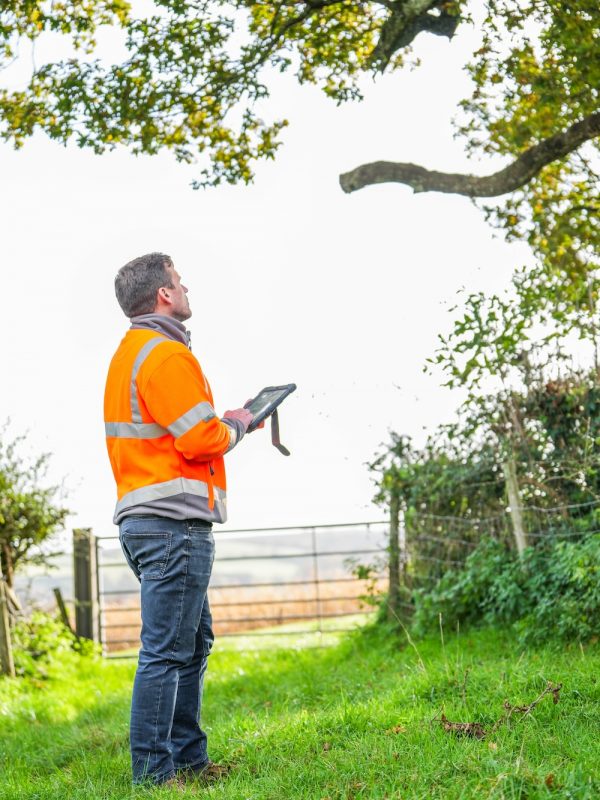
Using the findings from the BS 5837 Tree Survey, alongside the proposed site layout and development objectives, we provide clear, evidence-based tree retention recommendations on which trees should be retained and which may be removed. Each tree is evaluated in terms of its quality category (A, B, C or U), structural condition, life expectancy, ecological contribution, visual amenity and any cultural or heritage value it may hold.
Retention recommendations highlight trees that offer significant landscape or environmental benefit and should be incorporated into the design. We identify opportunities to enhance these trees’ long-term prospects through appropriate protection, management and sensitive site planning. Conversely, where a tree is in poor condition, poses a safety risk, or creates an unavoidable design conflict, we provide justified, defensible removal recommendations supported by professional reasoning.
Our approach balances development needs with responsible arboricultural practice, helping to create workable, compliant and sustainable layouts. Transparent recommendations enable architects and planners to design with realistic constraints in mind, reducing redesigns and avoiding unexpected conflicts later in the planning process.
Presenting a clear and defensible tree strategy often strengthens planning applications, giving local authorities confidence that impacts have been carefully assessed and managed in line with BS 5837:2012. This leads to smoother approvals and better long-term outcomes for both the development and the surrounding treescape. Contact our experts today!