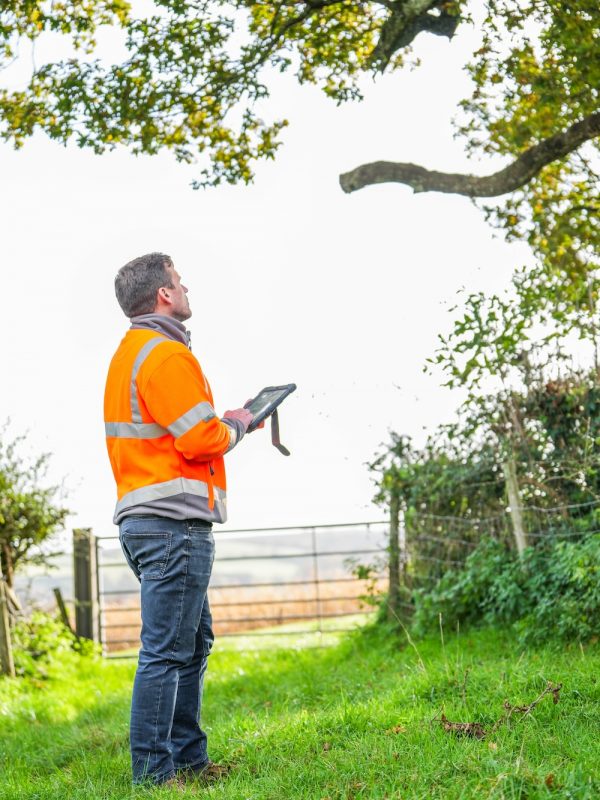
BS5837 Tree surveys are a critical first step in any development project where trees may be affected. Conducted in accordance with BS 5837:2012 Trees in relation to design, demolition and construction, these surveys provide comprehensive, site-specific information about every relevant tree—both on the site itself and within influencing distance of the proposed development.
Each tree is recorded in detail, including species, age class, height, stem diameter, crown spread, physiological and structural condition, life expectancy and any notable features. Crucially, the survey assigns each tree a quality category (A, B, C or U), helping stakeholders understand its relative arboricultural value and whether it should be prioritised for retention, monitored, or removed.
For architects, planners and developers, a BS5837-compliant survey forms the evidence base for informed design. It identifies constraints such as root protection areas, shading patterns, low-branching canopies, or trees of high amenity value, as well as potential opportunities such as integrating existing trees into landscape proposals. By addressing these considerations early, the design process becomes more efficient, reducing later conflicts and helping avoid costly redesigns or planning delays.
Local planning authorities often require BS5837 tree surveys before they will validate a planning application, as it ensures tree-related impacts are considered from the outset. By providing clear, accurate data and professional recommendations, our surveys support both sustainable development and responsible tree management, helping your project progress smoothly through the planning system. Get in touch with us today!