Whether you have a single sweet chestnut in your garden or manage a larger number of trees across an estate or woodland, being able to recognise the signs of sweet chestnut blight is now essential—particularly in Devon and the wider South West.
With a confirmed outbreak in the region and the introduction of a demarcated area, early detection plays a key role in limiting spread and ensuring appropriate action is taken. This guide provides a clear, practical approach to inspecting your trees and identifying symptoms before deciding whether to seek professional or official advice.
Where Sweet Chestnut Blight Symptoms Appear
Sweet chestnut blight affects the above-ground parts of the tree.
The fungus (Cryphonectria parasitica) enters through wounds in the bark and infects the underlying tissues responsible for transporting water and nutrients. As the infection develops, it spreads around the stem or branch, forming characteristic cankers.
When inspecting your trees, focus on:
- Main stems and larger structural branches
- Bark at eye level and below, where symptoms are often easier to identify
- Branch junctions and unions with the main stem
- Areas where previous pruning cuts or damage may have occurred
It is important to distinguish these symptoms from root-related issues. Problems such as waterlogging or root disease can also cause dieback, but they do not typically produce the distinct bark cankers associated with sweet chestnut blight.
Key Symptoms of Sweet Chestnut Bligh
Recognising the combination of symptoms is critical. Individual signs may have other causes, but together they can indicate a potential blight infection.
Cankers and Dead Bark Patches
One of the most consistent indicators is the presence of cankers.
These appear as:
- Sunken or depressed areas of bark
- Cracked or split surfaces
- Discoloured patches, often darker than surrounding tissue
- Areas where bark may be peeling or flaking away
Cankers often have a clearly defined edge, where healthy bark meets dead or dying tissue. Over time, these areas may expand around the stem or branch.
Orange Fruiting Bodies on the Bark
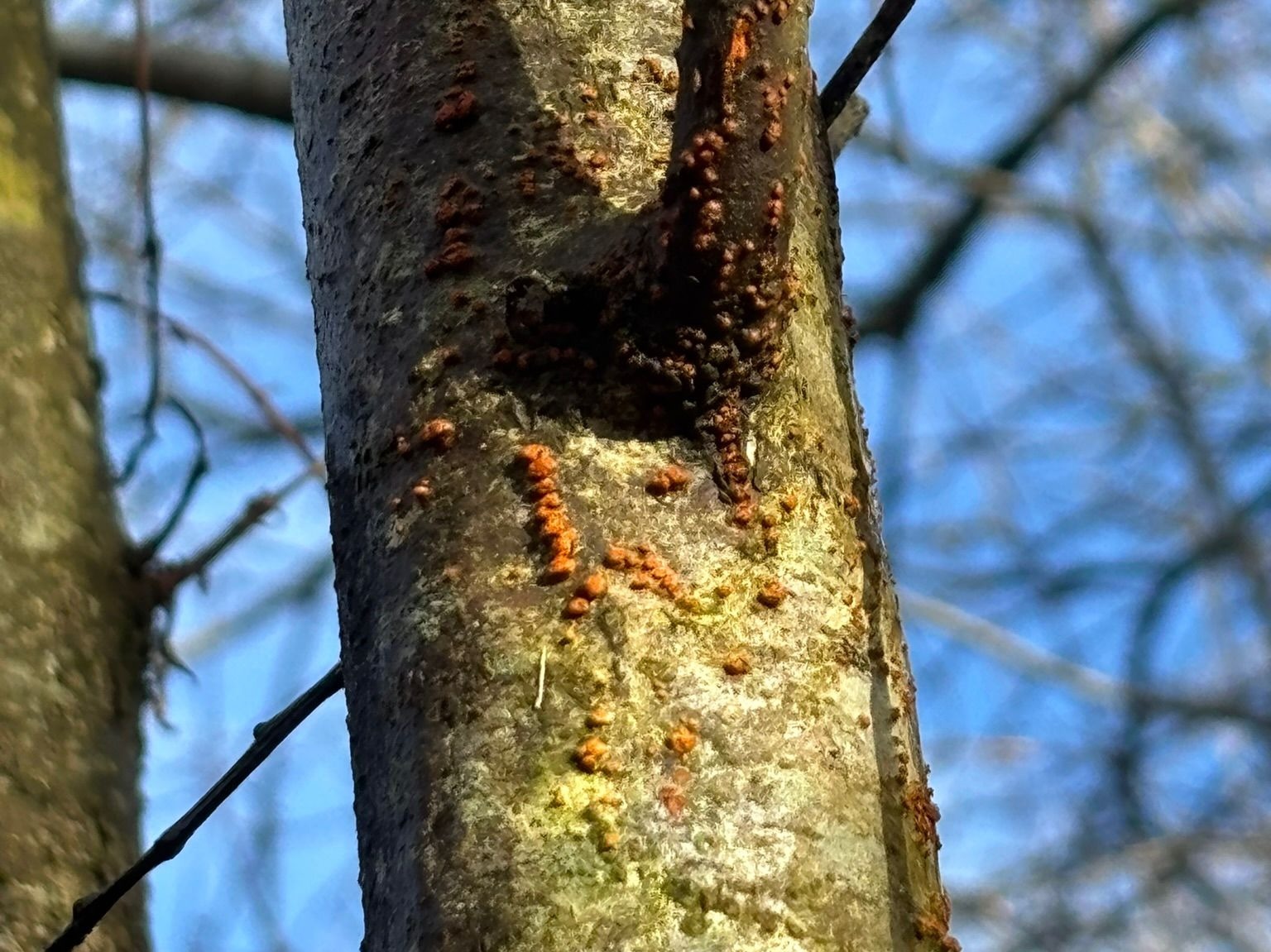
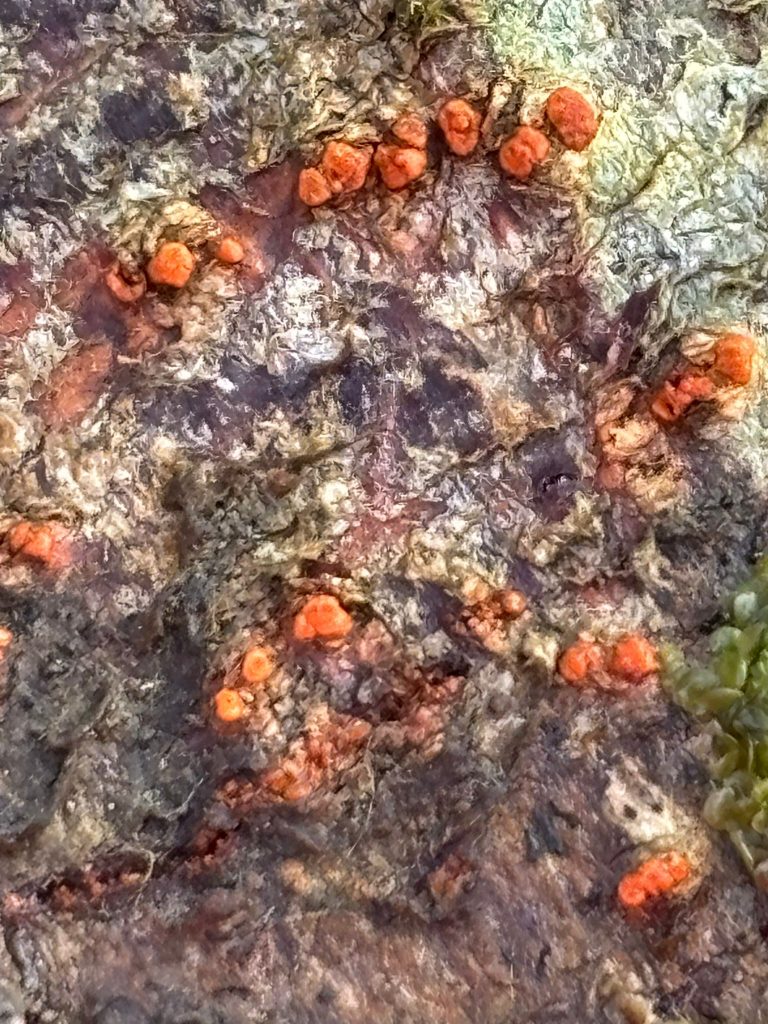
A key identifying feature of sweet chestnut blight is the presence of small orange fruiting bodies on or around infected bark.
These may appear as:
- Bright orange or reddish pustules embedded in the bark
- Small, raised spots clustered around cankered areas
In damp or wet conditions, these structures may produce orange-yellow spore tendrils, which can appear as fine, thread-like strands emerging from the bark surface.
This feature is one of the more distinctive signs and should be taken seriously if observed.
Dieback Above the Canker
Because the infection disrupts the tree’s vascular system, it can effectively cut off the supply of water and nutrients to the canopy above the affected area.
This often results in:
- Wilting or browning leaves above the canker
- Sections of canopy dying back while lower parts remain healthy
- Leaves that remain attached to the tree even after turning brown
Below the canker, the tree may appear relatively unaffected and may even produce vigorous new growth as it attempts to compensate.
Multiple Affected Areas on One Tree
Sweet chestnut blight does not always appear as a single infection point. It is common to find:
- Multiple cankers on different branches or stems
- Patchy canopy condition, with a mix of healthy and declining sections
- Progressive spread over time if left unmanaged
This uneven appearance can make early detection more challenging, particularly in larger trees.
Distinguishing Sweet Chestnut Blight from Other Issues
Several other conditions can produce symptoms that may initially resemble sweet chestnut blight.
These include:
- Phytophthora root or collar diseases, which can cause general decline and dieback
- Physical damage to bark from machinery, animals, or environmental stress
- Secondary fungal infections following injury
However, the combination of:
- Clearly defined bark cankers
- Orange fruiting bodies
- Dieback above the point of infection
is strongly indicative of sweet chestnut blight.
Because symptoms can overlap, laboratory testing of bark samples may be required for formal confirmation. Where there is uncertainty—particularly within the Devon demarcated area—it is advisable to treat suspicious symptoms with caution.
A Simple Inspection Routine
Regular inspection is one of the most effective ways to detect problems early.
For both domestic and larger-scale tree management, a straightforward routine can significantly improve your ability to identify issues:
- Inspect your sweet chestnut trees at least once or twice per year
- Carry out checks during the growing season, when canopy condition highlights dieback more clearly
- Examine stems and main branches closely for cankers, cracks, or discolouration
- Check multiple sides of the tree, not just the most visible aspect
- Take clear, dated photographs of any unusual features
- Record observations so changes can be monitored over time
This approach supports early detection and provides useful evidence if professional or regulatory advice is required.
Why Early Identification Matters
Experience from previous outbreaks has shown that early detection can significantly reduce the spread and impact of sweet chestnut blight.
Prompt identification allows:
- Faster reporting to plant health authorities
- Targeted management of affected trees
- Reduced risk of wider infection
- Better outcomes for surrounding trees and woodland
With the disease now present in Devon, vigilance at all levels—from individual homeowners to woodland managers—is essential.
Professional Support and Next Steps
If you suspect sweet chestnut blight, it is important not to carry out major works or move potentially infected material without guidance.
At Devon Tree Services, we can assist with:
- Tree condition assessments
- Identification of potential symptoms
- Advice on next steps and compliance
- Safe and appropriate tree management
- Liaison with relevant authorities where required
All work is carried out in line with BS3998:2010 Tree Work – Recommendations and current plant health guidance.
What Happens Next?
In the final part of this series, we explain what to do if you suspect sweet chestnut blight, including:
- Legal responsibilities within the Devon demarcated area
- Reporting procedures
- How professional support can help manage the situation safely and compliantly
If you have concerns about a sweet chestnut tree on your property, contact Devon Tree Services for clear, practical advice.
Phone: 01803 814126
Email: info@devontreeservices.co.uk