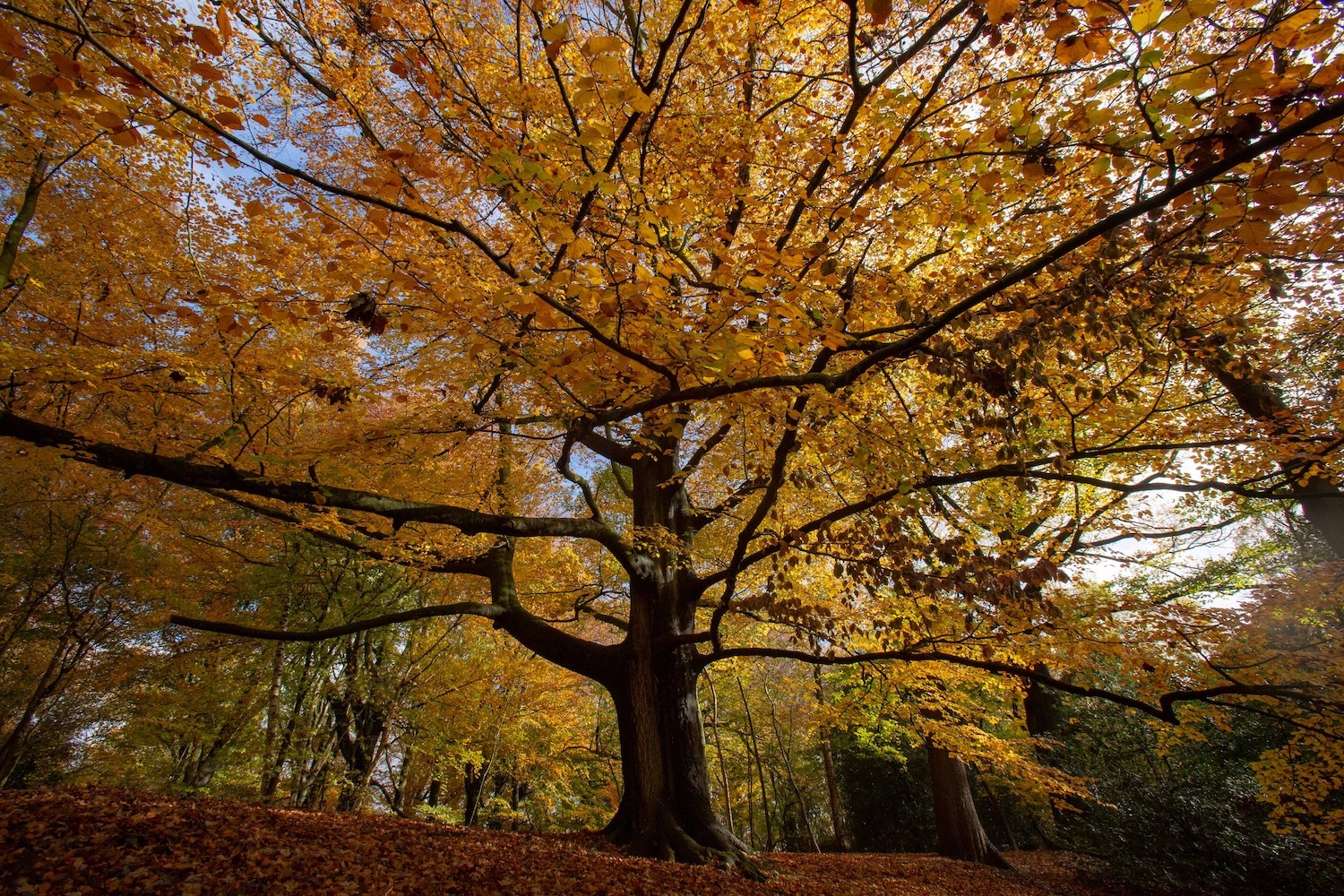
Why Do Leaves Change Colour in Autumn? It is a question many of us ask as Devon’s gardens, parks, hedgerows and woodlands change from summer green to shades of yellow, orange, red and bronze.
For deciduous trees, autumn colour is part of a normal seasonal process. As daylight decreases and trees prepare for winter, green chlorophyll begins to break down. This reveals other pigments within the leaves, while some species also produce pigments responsible for vivid reds and purples.
The result can be spectacular, but the timing and intensity of autumn colour varies considerably between species, individual trees and different years.
Understanding why also helps distinguish normal seasonal change from unusual leaf discolouration or premature leaf loss that might deserve a closer look.
Why Do Leaves Change Colour in Autumn as Days Shorten?
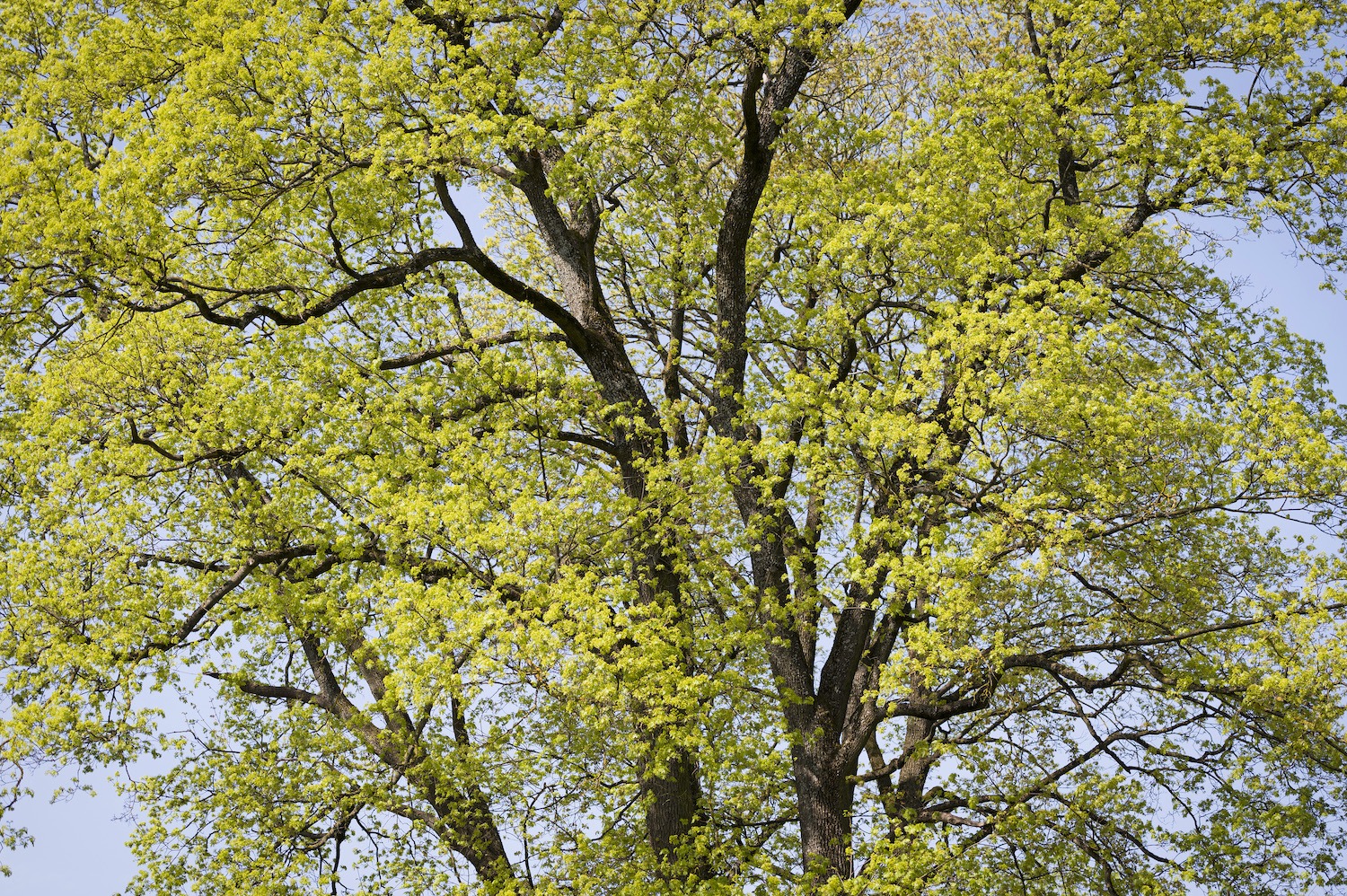
During spring and summer, leaves contain high concentrations of chlorophyll.
Chlorophyll is the green pigment that plays a central role in photosynthesis, allowing a tree to capture light energy and use it to produce sugars from water and carbon dioxide.
Because chlorophyll is so visually dominant, it masks many of the other pigments present within leaves.
As autumn approaches and daylight hours shorten, deciduous trees begin their seasonal transition. Chlorophyll is no longer maintained at the same rate and gradually breaks down.
Once that green colour diminishes, other pigments become much easier to see.
This seasonal change is normal. A tree beginning to turn yellow or orange in autumn does not automatically require feeding, pruning or treatment.
Why Do Leaves Change Colour in Autumn from Green to Yellow?
Many of the yellow and orange colours visible during autumn come from pigments known as carotenoids.
These pigments can be present within leaves throughout the growing season but are normally concealed by chlorophyll.
When chlorophyll breaks down, the colours that were already there become visible.
That is why species such as birch, beech and various maples can develop attractive shades of yellow or gold as autumn progresses.
The precise colour depends partly on species.
One tree turning yellow rather than red does not mean it is deficient in something or unhealthy. It may simply reflect the normal pigmentation and seasonal behaviour of that species.
Where do red and purple leaves come from?
Red and purple autumn colours involve another group of pigments called anthocyanins.
Unlike many of the yellow pigments already present within the leaf, anthocyanins can be produced as the autumn transition develops.
Their formation is influenced by several factors, including:
- Tree species
- Light levels
- Temperature
- Sugar concentrations within the leaf
- Weather conditions
Certain combinations of sunny days and cool nights can encourage particularly vivid red colouring in species capable of producing these pigments.
Not every tree produces anthocyanins to the same extent, which is one reason autumn displays can vary so dramatically between species.
Why are autumn colours better in some years?
Weather plays an important role in determining both the intensity of autumn colour and how long it remains on the tree.
According to the Woodland Trust, temperature, sunshine and moisture conditions all influence the display.
Bright autumn days can help sugars accumulate in leaves, while cool temperatures can accelerate the loss of green chlorophyll.
However, there is a limit to the idea that dry weather creates better autumn colour.
Severe drought may cause leaves to brown, deteriorate or fall prematurely rather than progressing through a long and colourful autumn display.
Strong winds can also remove leaves before colour development reaches its peak.
This helps explain why the same tree can produce a striking display one year and a much less dramatic one the next.
For a detailed explanation of the process, see the Woodland Trust guide to autumn leaf colour.
Why does one tree change before another?
Trees do not all enter autumn at precisely the same time.
Different species have different seasonal patterns, and trees of the same species can also behave differently depending on their surroundings.
Factors can include:
- Soil moisture
- Exposure
- Temperature
- Sunlight
- Local shelter
- Tree age and condition
- Recent weather
A sheltered garden tree may retain its green foliage longer than the same species growing in an exposed position nearby.
Similarly, one tree changing colour slightly before another does not, by itself, demonstrate that anything is wrong.
Looking at the wider pattern is usually more informative than comparing two individual trees in isolation.
Why do deciduous trees shed their leaves?
For deciduous trees, leaf fall is another normal part of preparing for winter.
As the seasonal transition progresses, a specialised layer of cells develops at the point where the leaf stalk joins the twig. This eventually allows the leaf to detach.
Shedding leaves reduces the tree’s winter canopy at a time when light levels are lower and maintaining summer foliage would provide limited benefit.
It also reduces the surface area exposed to winter winds.
The leaves do not become useless once they reach the ground.
In natural settings, fallen leaves are broken down by fungi, bacteria and other organisms. This returns organic material to the soil and contributes to the wider ecosystem around trees.
Where practical, allowing some leaf litter to remain beneath suitable trees and shrubs can therefore benefit soil and wildlife.
When is changing leaf colour not normal?
Seasonal yellowing and leaf fall are usually nothing to worry about.
The timing and pattern become more significant when they are clearly unusual for the tree or accompanied by other changes.
It may be worth seeking advice if you notice:
- Extensive leaf loss well before normal autumn colour
- One substantial part of the crown browning while the remainder stays green
- Progressive crown dieback
- Broken or damaged branches
- Significant bark changes
- Fungal fruiting bodies
- A sudden decline following construction or excavation
- Changes around the rooting area
- Similar symptoms becoming more severe each year
Premature browning and leaf loss can occur when trees are affected by drought, root disturbance and other environmental stresses.
However, leaf colour alone rarely identifies the cause.
The condition of the whole tree, its surroundings and its recent history need to be considered.
Autumn colour is not a reason to prune
It is also worth emphasising what autumn colour does not tell us.
A tree changing colour normally does not require pruning simply because leaves are falling.
Tree work should have a clear objective based on the condition of the tree and what is being managed.
Where pruning is appropriate, recognised objectives can include crown reduction, crown thinning, crown lifting, formative pruning and deadwood removal.
All pruning undertaken by Devon Tree Services is carried out in line with BS3998:2010 and relevant environmental legislation.
When should you ask for professional advice?
If the change looks unusual rather than seasonal, a professional assessment can help establish what is happening.
At Devon Tree Services, our qualified arboriculturists can consider tree condition, surrounding land use and any recent changes to the rooting environment.
The appropriate recommendation might be:
- Monitoring
- Changes to tree aftercare
- Further investigation
- A tree condition assessment
- Targeted tree work where justified
It does not automatically mean pruning or removal.
You can find more information about our arboricultural consultancy and tree assessment services.
Enjoy the autumn display
So, Why Do Leaves Change Colour in Autumn?
It is largely the result of trees responding to shorter days and changing seasonal conditions. As chlorophyll breaks down, yellows and oranges become visible, while some trees produce the pigments responsible for reds and purples.
Weather then helps determine just how spectacular the display becomes.
Most autumn colour is simply part of the annual rhythm of a healthy deciduous tree.
If your tree is changing unusually early, deteriorating rapidly or showing other symptoms alongside leaf discolouration, Devon Tree Services can provide qualified advice and help determine whether anything further is required.