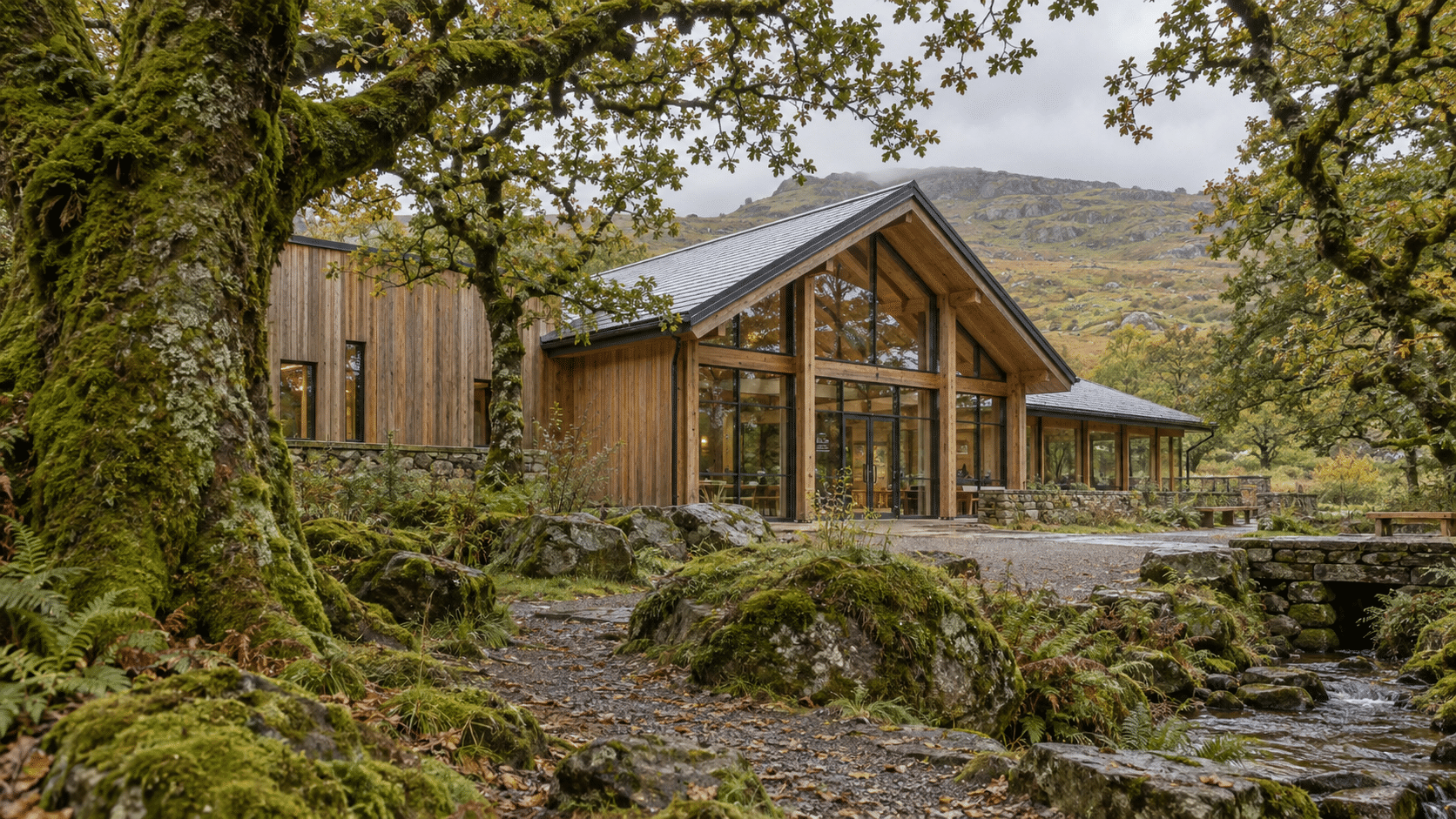
A new woodland centre is taking shape at Yarner Wood, part of the East Dartmoor Woods and Heaths National Nature Reserve.
Natural England announced on 11 November that the sustainable building will replace the reserve’s ageing visitor centre, providing year-round space for conservation, education, volunteering and wellbeing activities. Read Natural England’s announcement
It is a positive local story about woodland management, and about helping people build a stronger connection with trees.
What is happening at Yarner Wood?
Yarner Wood sits within the East Dartmoor Woods and Heaths National Nature Reserve, near Bovey Tracey on the eastern edge of Dartmoor. The reserve is one of the best examples of western oak woodland in the country and forms part of a landscape that has been wooded for centuries.
The new centre will replace facilities that have served visiting schools, volunteers and researchers for decades, giving the reserve a building that matches the importance of the site itself.
A building shaped by its woodland setting
The new centre is being constructed using timber sourced from the surrounding landscape.
Its Douglas fir frame was donated by the Woodland Trust from the nearby Bovey Valley woods. The timber came from conifers removed as part of work to restore plantations on ancient woodland sites to native woodland and temperate rainforest.
Natural England also describes plans for predominantly western red cedar cladding supplied by the Woodland Trust. Natural England’s blog
Rather than viewing the building and the woodland as separate projects, the centre brings their stories together: material from woodland restoration is being used to support future conservation and education.
What is temperate rainforest?
Temperate rainforest is one of the rarest woodland habitats in the world, and the South West holds some of its best remaining fragments in the UK. These are woodlands with a mild, wet climate where mosses, ferns and lichens cover trunks, branches and boulders.
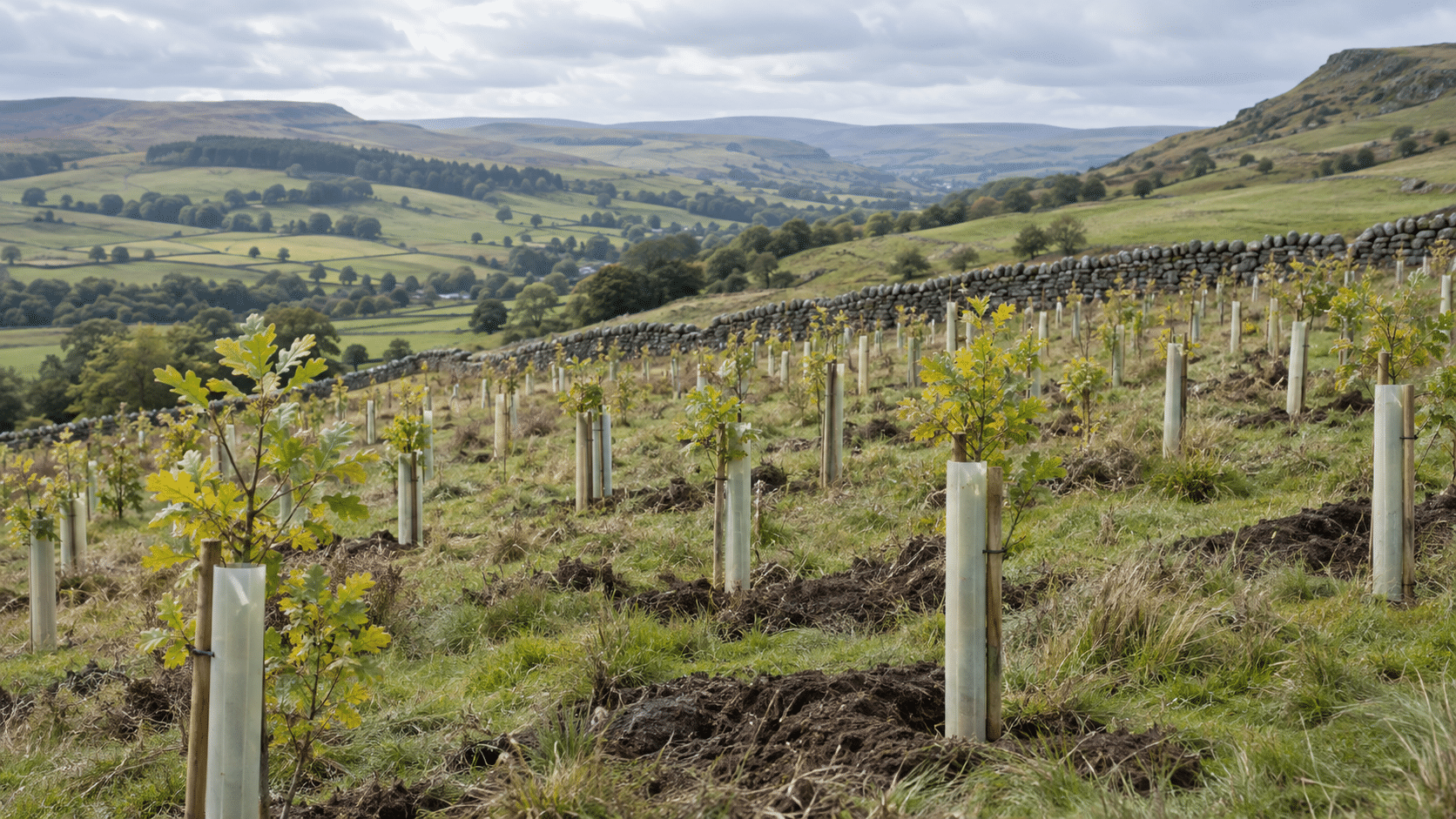
Many surviving patches were planted over with conifers during the twentieth century. Restoring them means gradually removing those conifers so native oak, birch and hazel can return, along with the wildlife that depends on them.
That is the context for the felled timber now going into the Yarner Wood centre: trees removed for a carefully planned ecological reason, put to lasting use a short distance from where they grew.
Why were trees removed as part of woodland restoration?
Seeing trees felled can understandably concern people, particularly in a landscape valued for nature.
In this case, Natural England explains that conifers were removed through the Plantations on Ancient Woodland Sites programme, helping restore areas to native woodland and temperate rainforest.
The important point is that the purpose of management matters.
This project should not be read as an argument that every non-native tree should be removed. It is a specific restoration scheme on a particular site, with objectives linked to its woodland history and habitat.
For anyone responsible for trees, that distinction is useful: a recommendation should be explained in relation to the site and its long-term aims.
How will the new centre operate?
The facility is designed to operate off-grid, using solar power, battery storage and rainwater harvesting.
Natural England notes that the wooded, steep-sided valley can limit solar generation, particularly in winter. The design therefore responds to the realities of the location rather than assuming sunlight will always provide enough power. Heating is planned primarily through a gasification boiler, alongside high levels of insulation. Natural England’s blog
These details show how sustainability depends on understanding the setting and designing around its constraints.
What will the centre be used for?
Natural England says the centre will offer opportunities for local communities, schools and visitors to learn, volunteer and spend time outdoors.
Planned uses include conservation activities and wellbeing work, including NHS partnerships such as woodcraft for wellbeing and art therapy in nature.
The previous centre already supported schools, universities and student nurses. The new facility is intended to build on that role and welcome additional groups and partners. Natural England’s blog
It is a reminder that woodland value is not limited to timber or the number of trees standing on a site. It also includes the opportunities people have to understand, enjoy and care for it.
When is the new centre expected to open?
As of Natural England’s November update, the frame and roof were complete, windows had been installed and cladding was due to follow.
Completion is expected by the end of 2026, with a launch event planned for March 2027. These remain planned timescales, and visitors should check East Dartmoor National Nature Reserve’s official updates before arranging a visit specifically to see the new facility. Natural England’s announcement
What can tree owners learn from the project?
For us, the most relevant lesson is the value of a clear purpose.
Whether the task involves one garden tree or a larger woodland, useful questions include:
- What are we trying to achieve?
- What is valuable about the existing site?
- What should be retained and protected?
- Is intervention necessary?
- How will today’s decisions affect the site in future?
The scale may differ, but the need for a reasoned approach remains.
There is also a practical point here for anyone managing mature trees on their own land. The Yarner Wood scheme works because every felled tree had a documented reason and a planned destination. The same discipline applies at garden or estate scale: understand what you have, decide what outcome you want, and only then reach for the saw.
Enhancing relationships between people and trees
At Devon Tree Services, our core purpose is enhancing relationships between people and trees.
The Yarner Wood project is a welcome local example of that relationship in practice: woodland restoration supporting a building that will help more people learn about and care for woodland.
We are reporting on the project, not claiming involvement in its construction or management.
For our own clients, we bring the same emphasis on understanding the site, explaining recommendations and considering the longer-term outcome. Our qualified arboriculturists provide advice on tree condition, risk and management, with practical work undertaken by our trained arborists where it is justified.