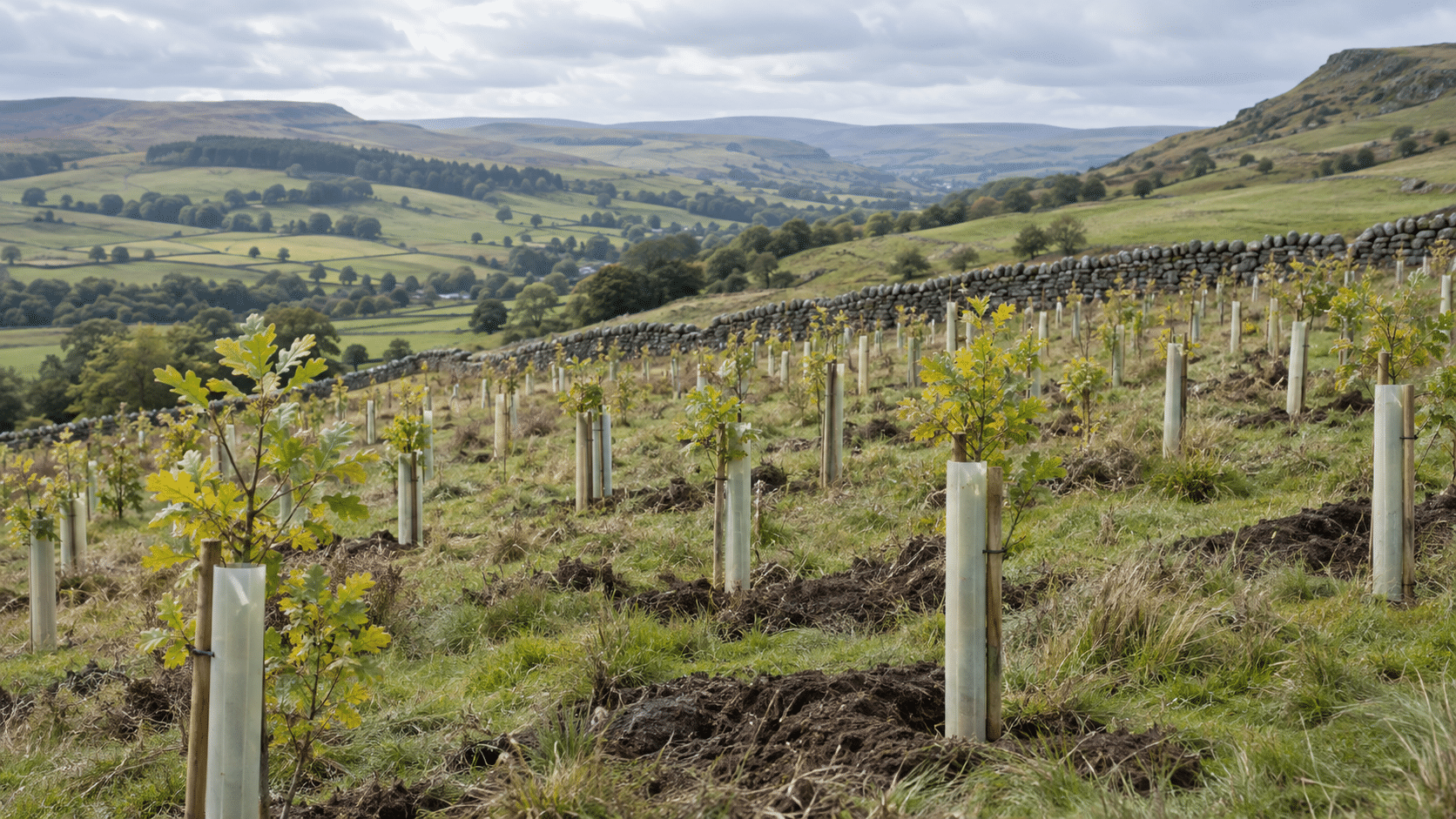
National Tree Week takes place from 21 to 29 November 2026. Led by The Tree Council and its partners, it brings communities, volunteers and organisations together to celebrate trees and mark the beginning of the traditional winter planting season. The Tree Council
It is a welcome opportunity to plant something for the future. However, the long-term success of a planting project depends on more than the number of trees that go into the ground.
At Devon Tree Services, we believe the question should not simply be, “How many trees have we planted?” It should also be, “What have we done to help them establish?”
When is National Tree Week 2026?
National Tree Week 2026 runs from Saturday 21 November to Sunday 29 November. It is the UK’s largest annual tree celebration and marks the traditional start of the winter tree planting season, when bare-root and rootballed stock becomes widely available.
Schools, community groups, landowners and local authorities across the country use the week to plant trees and hedges, and to draw attention to the care young trees need after the spades are put away.
Why is November a popular time to plant trees?
Autumn and winter are important planting seasons, particularly for bare-root and rootballed trees.
Bare-root trees are supplied without a container of soil around their roots, while rootballed trees are lifted with soil retained around the root system. Both are generally available during autumn and winter. The Royal Horticultural Society identifies October to April as the best general planting period for trees and shrubs. RHS guidance
Planting in this window gives a tree the best chance of putting out new roots before the demands of spring growth, and the cooler, wetter weather reduces the watering burden in the first few months.
But choosing a suitable month is only part of the decision. Conditions on the day matter too.
Do not plant simply because the calendar says it is time
A planned planting day can create pressure to get everything finished, regardless of the ground conditions.
However, planting should be delayed if the soil is frozen or waterlogged. The RHS advises against planting where water is sitting on the surface or pooling in the bottom of the planting hole.
For Devon gardens, estates and development sites, this is an important practical consideration. If conditions are unsuitable, waiting is better than forcing the job through.
Trees that cannot be planted immediately need appropriate temporary care. Bare-root and rootballed stock must not be allowed to dry out; temporary planting, known as heeling in, may be needed until the permanent site is ready.
Planting too deeply can cause lasting problems
One of the most important details is also one of the easiest to overlook: planting depth.
The RHS recommends positioning the tree so the first flare of roots sits level with the finished soil surface. Deep planting restricts air movement to the roots and leaves the lower trunk vulnerable to disease. It is a common cause of poor establishment and tree death.
Adding extra soil around the stem does not give a young tree a better start.
Instead, the planting hole should accommodate the roots at the correct depth, with suitable room for them to spread. The RHS recommends a hole no deeper than the roots and ideally at least three times the width of the root system.
A simple check before backfilling is to lay a cane or straight edge across the hole. The root flare should sit level with it. If the tree is container-grown, tease out any circling roots first so they grow away into the surrounding soil rather than strangling the tree later.
Does every new tree need a stake?
Not necessarily.
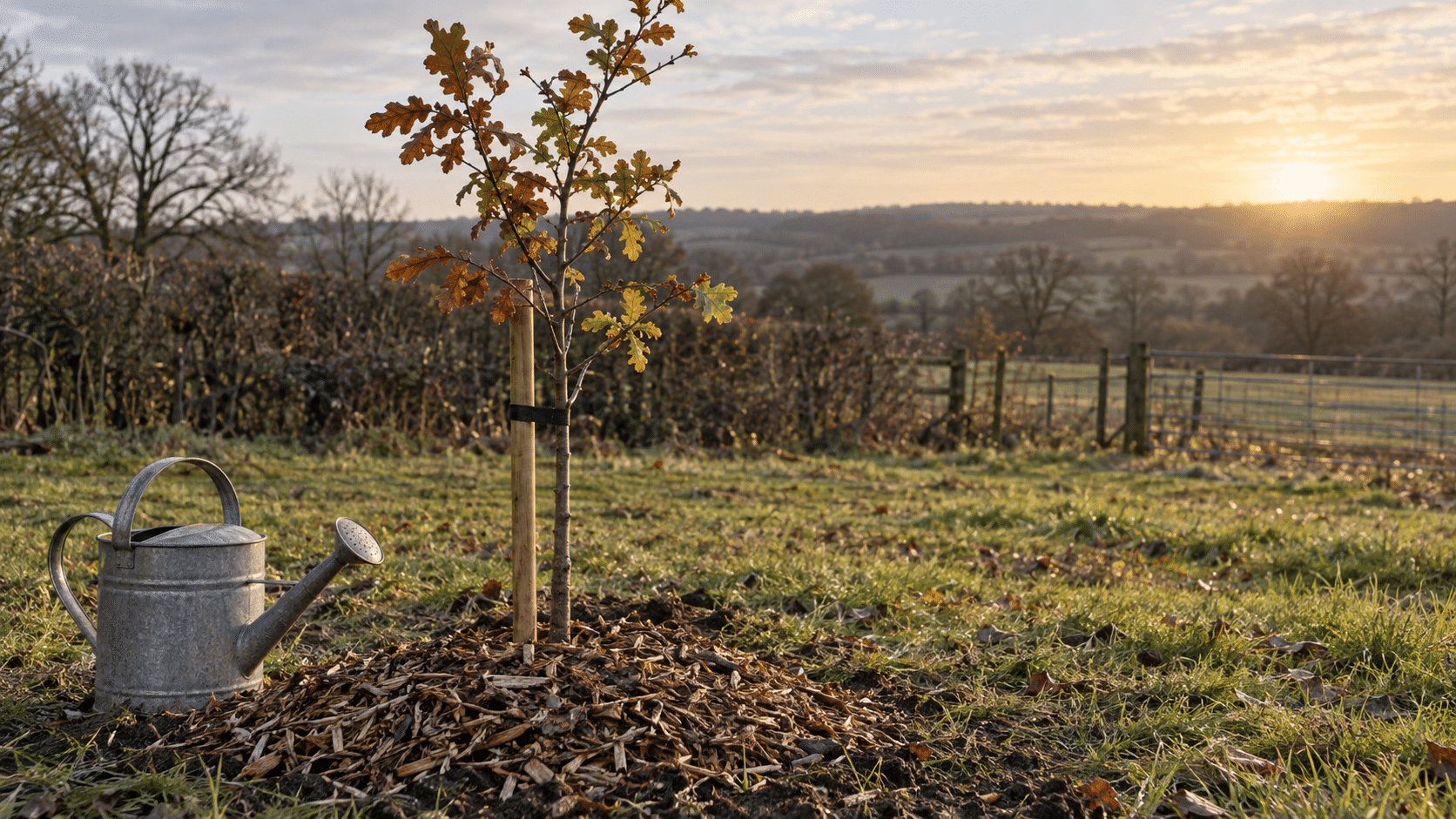
Staking should respond to the tree’s size, form and exposure rather than being treated as an automatic addition to every planting job. The RHS notes that small trees may not need staking, while larger or top-heavy specimens require support.
A tree that can move slightly in the wind actually develops a stronger trunk and root system, so unnecessary staking can work against establishment rather than for it.
Where stakes and ties are used, they need checking as the tree grows. A tie that was suitable at planting can eventually constrict the stem if it is left unadjusted.
The RHS recommends inspecting ties in spring and autumn and adjusting them to prevent constriction. Supports should be removed once the tree is sufficiently anchored.
Who is responsible after planting day?
A planting project should have an aftercare plan before the first hole is dug.
That means deciding:
- Who will check the trees.
- Who will water them during dry weather.
- Who will inspect stakes and ties.
- Who will identify and respond to failed trees.
- How maintenance will be funded and recorded.
This matters for a single garden tree just as much as a larger community or development planting scheme.
Planting is a visible event. Aftercare is quieter, but it is essential. Young trees need support through their establishment period, including watering when conditions require it. Arboricultural Association guidance
What does good aftercare look like in the first three years?
Most young trees that fail do so in their first two or three growing seasons, and the cause is usually water stress or competition rather than disease.
A simple aftercare routine makes the difference:
- Watering. Give new trees a thorough soaking during dry spells in spring and summer, little and often is less effective than an occasional deep water that reaches the full root zone.
- Mulching. A 5 to 8cm layer of organic mulch around the base, kept clear of the stem itself, holds moisture, suppresses weeds and feeds the soil as it breaks down.
- Weed control. Keep at least a metre diameter around the tree free of grass and weeds, which compete hard for water and nutrients.
- Guards and protection. Where rabbits, deer or livestock are present, guards need checking as regularly as stakes and ties.
- Formative checks. A quick annual inspection for damage, rubbing branches or early defects is far cheaper than correcting structural problems in a mature tree.
Key points to remember
- National Tree Week 2026 runs from 21 to 29 November.
- October to April is the best general planting window, but never plant into frozen or waterlogged ground.
- Plant with the root flare level with the soil surface; deep planting is a common cause of failure.
- Stake only where the tree genuinely needs support, and check ties in spring and autumn.
- Agree the aftercare plan, watering, mulching, weeding and inspections, before planting day.
How Devon Tree Services can help
Our earlier guide to planting the right tree in the right place explains species choice and positioning. This is the next step: making sure the planting itself and the ongoing care support that choice.
At Devon Tree Services, we can help you consider planting proposals alongside the existing trees, site conditions and longer-term management needs.
Our approach is to provide practical, proportionate advice rather than treat planting as a one-day task.
National Tree Week is a good reason to begin. A clear establishment plan is what helps that beginning become a lasting contribution.